
You know, for years, when I thought about road transport, my mind immediately jumped to the roar of engines, the open road, and those incredible logistical puzzles.
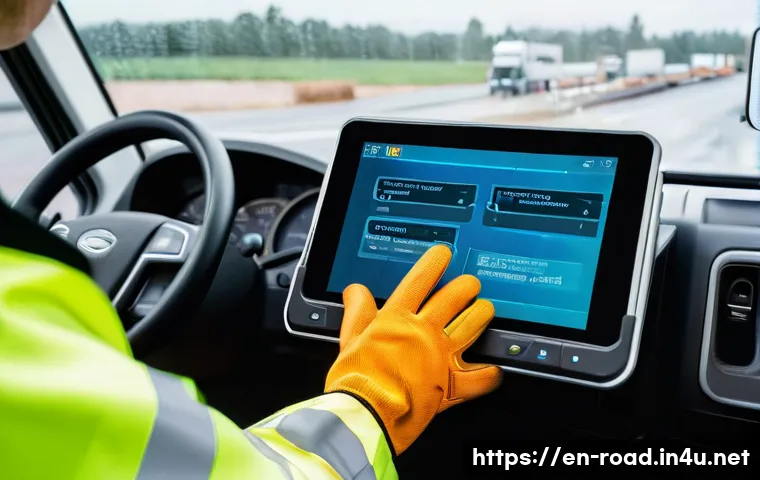
But what truly keeps the wheels turning smoothly, often more than anything else, is brilliant communication. It’s the unsung hero of our highways, isn’t it?
From truckers navigating tight city streets to dispatchers coordinating intricate routes, every single interaction carries immense weight, dictating everything from on-time deliveries to, more crucially, safety.
I’ve seen firsthand how a simple misunderstanding can throw an entire schedule into chaos, or worse, create a hazardous situation. With the rise of AI-powered logistics, real-time tracking, and ever-increasing customer demands for transparency, the way we communicate in this industry is evolving faster than ever before.
It’s no longer just about shouting directions over a crackling radio; it’s about clear, concise, and empathetic exchanges across multiple digital platforms and face-to-face.
Getting this right isn’t just good practice; it’s absolutely vital for staying ahead and ensuring everyone gets home safe. Trust me, it makes a world of difference for your career trajectory too.
Let’s find out exactly how we can master these essential communication skills.
The Unsung Power of Active Listening on the Road
Beyond Just Hearing: Truly Understanding the Message
I’ve seen firsthand how a simple misunderstanding can throw an entire schedule into chaos, or worse, create a hazardous situation. It’s not just about hearing the words; it’s about actively listening to truly grasp the intent behind them.
In my career, I’ve learned that a lot of issues could be avoided if everyone just took a moment to really process what’s being said, instead of just waiting for their turn to speak.
This means paying attention to tone, context, and even what isn’t being said. Sometimes a pause, a hesitant word, or a slight change in a dispatcher’s voice can tell you more than the direct instruction itself.
Developing this skill has been a game-changer for me, allowing me to anticipate problems and react proactively, rather than constantly putting out fires.
It’s like having a superpower for efficiency and safety.
Reading Between the Lines: Non-Verbal Cues in a Digital Age
It sounds a bit counterintuitive, doesn’t it? “Non-verbal cues” when we’re often miles apart, communicating through a screen or a radio. But even in our increasingly digital world, these subtle signals still play a massive role.
Think about the way a text message is phrased, the emojis (or lack thereof), or the speed of a reply. When I receive a short, abrupt message from a dispatcher, my antennae go up – it often signals stress or a pressing issue on their end, even if the words themselves are neutral.
It’s about understanding the human behind the device. On the flip side, as a driver, the way you acknowledge instructions can convey a lot. A quick, confident “Roger that, understood” sounds very different from a hesitant “Uh, yeah, got it.” These small things build a picture of reliability and confidence, or a lack thereof.
I’ve personally found that taking a moment to add a brief, reassuring phrase like “On it, thanks!” can dramatically improve the working relationship and reduce anxiety for both parties.
It’s about injecting a bit of human connection into our tech-driven interactions, making everyone feel more understood and valued.
Navigating the Digital Divide: Communicating Through Technology
Mastering ELDs and Dispatch Apps for Seamless Operations
Let’s be real, technology is both a blessing and a curse sometimes, especially when it comes to communication in our field. Gone are the days of purely paper logbooks and relying solely on two-way radios.
Now we have Electronic Logging Devices (ELDs), intricate dispatch apps, real-time tracking, and a whole suite of digital tools. Mastering these isn’t just about knowing how to push buttons; it’s about understanding the *language* of these systems and how to use them to communicate effectively.
I remember a time when a new ELD system was rolled out, and the sheer volume of misunderstood alerts and misinterpreted status updates caused absolute chaos for weeks.
Drivers were frustrated, dispatchers were overwhelmed. The key, I realized, was not just training on the interface, but training on *how to communicate through it*.
It’s about clear, concise entries, understanding the common abbreviations, and knowing when a quick text is better than trying to explain something complex through a rigid system.
Trust me, the time you invest in truly understanding your ELD and dispatch app’s communication features will pay dividends in saved time, reduced errors, and a lot less headache.
The Art of Concise Texting: When Every Word Counts
Oh, the humble text message! It seems so simple, right? Yet, I’ve seen more misunderstandings stem from poorly worded texts than I care to count.
In the fast-paced world of road transport, you often don’t have time for a full phone call, and a text is the quickest way to convey information. But here’s the trick: every single word counts.
Ambiguity is your enemy. When I’m texting, especially to a driver who’s navigating traffic or focusing on the road, I make sure my message is crystal clear and to the point.
For example, instead of “ETA later,” I’d text “ETA now 3 PM due to traffic on I-95.” See the difference? It provides context and actionable information.
I’ve personally developed a habit of re-reading my texts before sending them, imagining I’m the recipient and trying to spot any potential for misinterpretation.
And for drivers, acknowledging a text with a quick “Got it” or “Confirmed” is incredibly helpful for the sender. It closes the communication loop and prevents anyone from wondering if the message was received.
It’s a small effort that makes a huge impact on efficiency and peace of mind for everyone involved.
Crisis Communication: Keeping Calm When the Unexpected Hits
Reporting Incidents Clearly and Calmly
Let’s face it, no matter how much planning goes into a route, the road can be unpredictable. Breakdowns, accidents, severe weather, unexpected closures – these things happen.
And when they do, your ability to communicate clearly and calmly is absolutely paramount. I’ve been in situations where a driver, understandably stressed after an incident, called in a report that was so jumbled and frantic that it took 15 minutes to figure out what had even occurred.
This delay in accurate information can have serious consequences, impacting emergency response times, the deployment of roadside assistance, and even insurance claims.
My personal rule of thumb is to take three deep breaths before making that call or sending that message. Start with the most critical information: “I’ve had a minor fender bender at mile marker 23, southbound I-5, truck is drivable but needs inspection.” Then provide details in a structured way.
Imagine you’re writing a police report – clear, factual, and concise. It’s not just about getting help; it’s about providing the information needed to activate the right protocols swiftly and efficiently, minimizing further risk and getting everyone back on track as safely and quickly as possible.
Managing Expectations During Delays and Detours
One of the toughest parts of this job, in my opinion, is managing expectations when things go sideways. Customers, dispatchers, and even your own family might be counting on an estimated time of arrival that suddenly becomes impossible.
How you communicate these delays can make all the difference. I’ve learned that honesty and proactive communication are always the best policy, even if it’s bad news.
No one likes to be surprised by a late delivery. If I know I’m going to be delayed, I try to get ahead of it. A quick call or message to dispatch, explaining the situation (e.g., “Heavy congestion at the port, currently 2 hours behind schedule”) allows them to inform the client.
And if I’m the dispatcher, I make sure to give the client as much detail as possible, and a revised ETA, rather than just saying “It’s late.” People are generally more understanding if they feel informed and that you’re doing everything you can.
It’s about building trust, even when you’re delivering news they don’t want to hear. My personal experience has shown that clients appreciate transparency far more than they do sugar-coating or silence.
Building Strong Bonds: Dispatcher-Driver Rapport
Fostering Trust Through Transparent Information Sharing
Think about it: drivers and dispatchers are a team, essentially the two halves of a critical communication loop. When that loop is strong, everything runs smoother.
When it’s weak, chaos often ensues. I’ve always believed that trust is the foundation of this relationship, and nothing builds trust more effectively than transparent information sharing.
As a dispatcher, being upfront about load details, potential challenges, and even changes in schedule, even if they’re not ideal, fosters a sense of partnership.
And as a driver, providing accurate updates, even when you’re behind, shows responsibility. I remember one particular dispatcher who always explained *why* a certain route change was necessary, rather than just issuing a command.
That extra bit of context made all the difference; it showed respect for my intelligence and situation, and in turn, I was far more willing to go the extra mile for them.
It’s about treating each other not just as cogs in a machine, but as professionals who are working towards a common goal. This shared understanding reduces friction, improves problem-solving, and ultimately makes the job more enjoyable for everyone.
Empathy on the Airwaves: Understanding Each Other’s Challenges
It’s easy to get caught up in our own world – the dispatcher seeing a board full of trucks and deadlines, the driver battling traffic and fatigue. But I’ve found that a little empathy goes a long, long way.
For dispatchers, understanding that a driver might be tired, dealing with a mechanical issue, or stuck in a major backup can change the tone of a conversation entirely.
Instead of demanding an update, a simple “How are you holding up out there?” can open lines of communication that a harsh tone would shut down. Similarly, drivers need to remember that dispatchers are often juggling dozens of moving parts, dealing with demanding clients, and under immense pressure to keep everything flowing.
I’ve had moments where I’ve been frustrated, but then I stop and think about the dispatcher on the other end, probably just as stressed as I am. Acknowledging their situation, even if you’re just saying, “I know you’re busy, but I’ve hit a snag,” can soften the interaction and lead to a more collaborative solution.
It’s about remembering there’s a human on the other side of that radio or screen, with their own set of challenges and pressures.
Client Confidence: The Communicator’s Edge in Customer Service
Delivering Bad News Gracefully and Proactively
In the world of road transport, you’re not just moving goods; you’re often moving promises. And sometimes, those promises hit a pothole. It’s an unavoidable part of the business.
How you communicate these bumps in the road to clients can either strengthen or damage your relationship with them. My personal strategy has always been to deliver bad news gracefully and, most importantly, proactively.
If a delay is inevitable, don’t wait for the client to call asking where their shipment is. Be the one to reach out first. “We’ve encountered an unexpected delay due to [reason], and your delivery is now estimated for [new ETA].
We apologize for any inconvenience this may cause and are working to minimize the impact.” This approach demonstrates professionalism, respect for their time, and a commitment to transparency.
I’ve found that clients appreciate being kept in the loop, even if the news isn’t what they wanted to hear. It shows that you value their business and are managing the situation, rather than letting it manage you.
This builds incredible loyalty and trust in the long run.
Turning Challenges into Opportunities for Stronger Relationships
Believe it or not, every communication challenge, every delay, every unexpected hiccup, is actually an opportunity. An opportunity to show your clients just how good you are at problem-solving, how dedicated you are to their satisfaction, and how excellent your communication truly is.
I’ve had situations where a major weather event caused significant delays, and instead of just stating the obvious, I worked with dispatch to provide clients with real-time updates, alternative solutions where possible, and a clear path forward.
This proactive, solution-oriented approach transformed what could have been a frustrating experience into a moment where the client saw our team’s resilience and dedication.
They appreciated the constant communication and the effort to mitigate the situation. It’s not about avoiding problems, which is impossible; it’s about how you communicate through them.
By being transparent, empathetic, and solution-focused in your interactions, you can actually convert a negative situation into a positive reinforcement of your professionalism and reliability.
Safety First: Communicating Critical Information Effectively
Clear Pre-Trip Briefings and Hazard Alerts
When it comes to road transport, nothing, and I mean *nothing*, is more important than safety. And at the heart of a safe operation is crystal-clear communication, especially regarding potential hazards.
Every single pre-trip briefing, whether it’s a quick chat with dispatch or a detailed review of a route, is a chance to reinforce critical safety information.
I’ve personally seen how a thorough briefing about an upcoming construction zone, a notoriously tricky intersection, or even current weather advisories can prevent incidents.
It’s not just about dispatch rattling off facts; it’s about ensuring the driver has truly absorbed the information. This often involves asking open-ended questions like, “What are your concerns about the mountain pass today?” or “Can you confirm the specific hazardous material handling procedures for this load?” And for drivers, it’s about actively listening and not being afraid to ask for clarification.
If something isn’t clear, speak up! It’s your safety, and the safety of everyone else on the road, at stake. Effective communication in this area isn’t just good practice; it’s a lifesaver.
The Importance of Check-Ins: From Start to Finish
You know that feeling when you’re out on a long haul, and you haven’t heard from anyone for hours? Sometimes it’s peaceful, but other times, a little check-in can make a world of difference, both for safety and morale.
Regular, concise check-ins, whether they’re automated system updates or a quick radio call, are absolutely vital. As a driver, knowing that dispatch is tracking your progress and aware of your status provides a huge sense of security.
And from a dispatcher’s perspective, these check-ins provide crucial real-time data that helps keep the entire operation on schedule and identifies potential issues before they escalate.
I’ve always advocated for a structured check-in process – maybe after crossing state lines, or at specific waypoints. It doesn’t have to be a long conversation; sometimes, a simple “All good here, passing [location]” is enough.
This continuous loop of communication ensures that everyone is aware of the situation on the ground, allowing for quick adjustments, early intervention in case of a problem, and ultimately, a safer, more efficient journey for everyone involved.
| Communication Challenge | Impact on Road Transport | Effective Solution |
|---|---|---|
| Vague Instructions | Delays, wrong deliveries, increased fuel costs, driver frustration | Use clear, specific language (e.g., street names, unit numbers, specific times); confirm understanding verbally or with a text back |
| Emotional Responses / Aggressive Tone | Escalated conflicts, strained relationships, reduced cooperation, increased stress levels | Practice active listening, maintain a calm and professional tone, take a brief pause before responding to diffuse tension |
| Over-Reliance on Technology without Context | Missed critical details, misinterpretation of automated alerts, perceived lack of human connection | Supplement digital messages with quick calls for complex issues; add personal notes to automated messages; know when to pick up the phone |
| Lack of Proactive Updates | Surprised clients, missed deadlines, damaged reputation, increased inbound query calls | Provide timely updates on delays or changes before they are noticed; anticipate questions and provide answers preemptively |
| Ignoring Feedback / Lack of Follow-up | Unresolved issues, repeat problems, low morale, feeling unheard or undervalued | Actively solicit feedback, acknowledge receipt of information, and follow up on reported problems or suggestions to show you’re listening |
Wrapping Things Up
And so, as we pull the brakes on this discussion, I hope you’ve caught a glimpse of just how vital stellar communication is in the bustling world of road transport. It’s more than just talking; it’s about connecting, understanding, and truly listening to every message, whether it’s over the radio, through a text, or even in the silence between words. My own journey on the road has repeatedly shown me that sharp communication skills are the ultimate co-pilot, guiding us through challenges, building unshakeable trust, and ensuring we all get home safely. So, keep those lines of communication open, clear, and human!
Useful Info to Keep in Mind
1. Master Your Tech, Don’t Let It Master You: While ELDs and dispatch apps are game-changers, remember they’re tools. Take the time to understand their nuances, how they communicate, and when to step away from the screen for a human conversation. A quick call can save hours of misunderstanding that a terse text might create.
2. The Power of the Pause: In high-stress situations, whether you’re a driver reporting an incident or a dispatcher juggling multiple emergencies, taking a brief pause before speaking or typing can dramatically improve clarity and emotional control. It allows you to gather your thoughts and convey information more effectively.
3. Feedback is Your Fuel: Actively seek and provide feedback. As a driver, let your dispatcher know what’s working well or where communication could be smoother. As a dispatcher, regularly check in with your drivers beyond just task-related queries. This open loop creates a culture of continuous improvement and mutual respect.
4. Beyond the Job Title: See the Human: Always remember there’s a person on the other end of the line or screen, facing their own set of daily challenges. A little empathy, a friendly tone, or a brief moment of understanding can turn a potentially tense interaction into a collaborative solution, strengthening your professional relationships.
5. Proactive Transparency Wins Every Time: When delays or issues arise, it’s always better to be the first to inform. Whether it’s to a client or a team member, delivering news proactively, even if it’s less than ideal, builds immense trust and demonstrates professionalism. People appreciate being kept in the loop far more than being left in the dark.
Key Takeaways
At the end of the day, my biggest takeaway from years in this dynamic field is that communication isn’t just a soft skill; it’s the bedrock of efficiency, safety, and customer satisfaction in road transport. What truly separates the good from the great is the ability to not only transmit information but to truly connect, empathize, and build trust through every interaction. From the nuances of a text message to the calm reporting of a crisis, every word, tone, and timely update contributes to a smoother, safer, and ultimately more successful journey for everyone involved. It’s about remembering that behind every piece of cargo, every route, and every deadline, there are human connections driving the entire operation. Invest in your communication skills; they’re the most valuable cargo you’ll ever carry.
Frequently Asked Questions (FAQ) 📖
Q: With all the new tech like
A: I and real-time tracking, how has the way we communicate in road transport truly shifted from the good old days? A1: Oh, it’s a night and day difference, truly!
I remember when it felt like shouting into the void sometimes, just hoping your message got through on a crackly radio. Now? It’s a whole new ball game.
We’ve moved beyond just basic radio checks to a complex symphony of digital platforms, real-time tracking apps, and even AI-powered logistics systems.
What this means is communication has become incredibly precise and, frankly, much more demanding. Drivers aren’t just getting a destination; they’re getting live traffic updates, weather alerts, and even delivery window changes pushed directly to their devices.
For dispatchers, it’s about managing a constant stream of information and relaying it clearly, often in text or quick voice messages, rather than lengthy phone calls.
My own experience has shown me that this evolution demands a much higher level of clarity and conciseness. There’s less room for ambiguity when information is flying around so fast.
It’s about getting the right info to the right person at the exact right moment, ensuring everyone’s on the same page from the loading dock to the final drop-off.
It’s exciting, but it definitely means we’ve all had to level up our game!
Q: Beyond just “being clear,” what specific communication skills are absolutely crucial for professionals in road transport right now?
A: That’s a brilliant question, and honestly, it goes so much deeper than just being clear, though clarity is definitely foundational! From my vantage point, having navigated these roads for years, I’d say three skills stand out as non-negotiable.
First, active listening is paramount. It’s not just hearing the words; it’s understanding the context, the urgency, and sometimes, what’s not being said.
A dispatcher might be under immense pressure, or a driver could be dealing with unexpected road conditions. Really listening allows you to respond effectively and empathetically.
Second, conciseness with empathy. With digital platforms, we often communicate in quick bursts. Can you convey crucial information accurately and quickly without sounding abrupt?
Can you offer a brief word of encouragement or understanding when needed? That makes a massive difference. And finally, problem-solving communication.
Things go wrong – traffic jams, mechanical issues, unexpected detours. The ability to articulate the problem, propose solutions, and collaborate effectively with your team, whether it’s over a quick call or a message, is what keeps things moving and prevents small issues from snowballing into big headaches.
It’s about being a solution-finder, not just a message-sender.
Q: You mentioned that mastering communication can make a world of difference for our career trajectory. How exactly does excelling in these skills translate into real career advancement in the road transport industry?
A: Oh, absolutely! And I’m not just saying that because it sounds good; I’ve seen it firsthand, and it’s truly transformative. Think about it: in an industry where safety, efficiency, and on-time delivery are king, being an excellent communicator directly impacts all three.
When you’re known for clear, precise, and empathetic communication, you instantly become a more reliable and trusted member of the team. For drivers, this can mean getting preferred routes, being entrusted with more complex or high-value loads, and generally having a smoother, less stressful day-to-day.
You build a reputation as someone who gets the job done without fuss. For dispatchers or logistics managers, it means a more cohesive team, fewer misunderstandings, and ultimately, better performance metrics.
I’ve personally witnessed individuals who mastered these skills being the first to be considered for promotions, leadership roles, or even specialized training opportunities.
It’s because they reduce friction, solve problems before they escalate, and contribute to a positive working environment. Your communication isn’t just about sharing information; it’s about building relationships, fostering trust, and proving your value, making you an indispensable asset in anyone’s books.
It truly paves the way for you to move up and thrive!